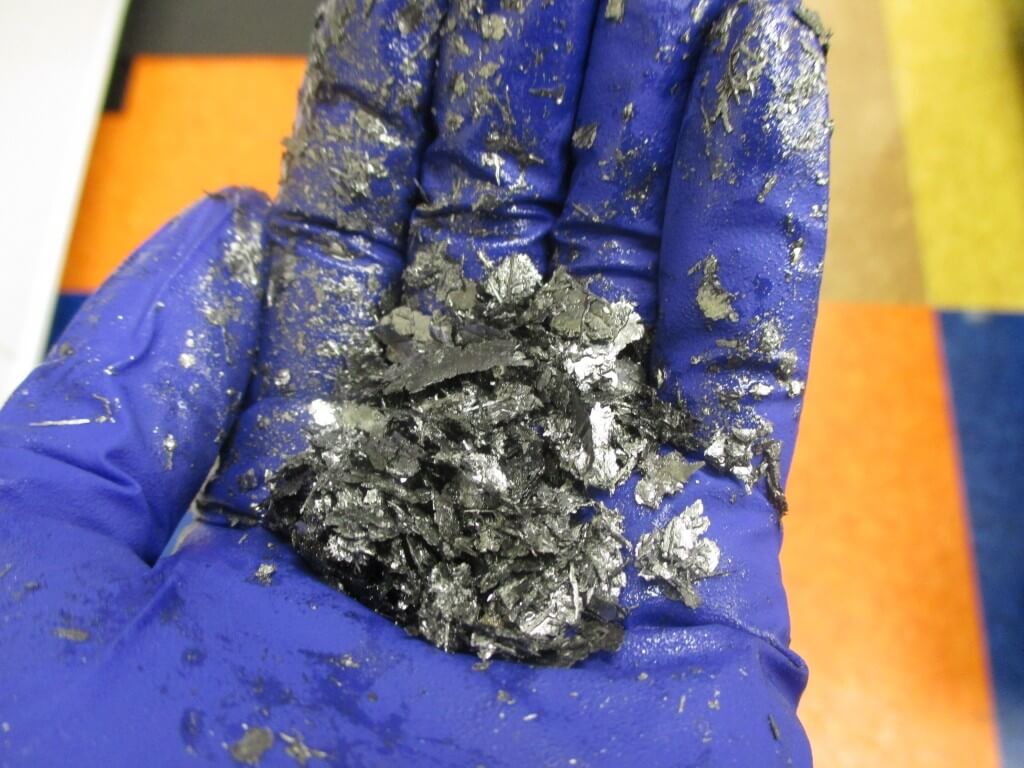
Since elemental spectroscopy is generally accepted as having lower accuracy measuring wear particles larger than approximately 10 microns, most labs employ some form of simple, large particle analysis specific to ferrous content. Ferrous content is chosen not only because it tends to represent the most common metal in machines, but also because it can be quantified quickly and inexpensively using magnetometer technology. However, not all methods for measuring abnormal ferrous content are created equal.
The Particle Quantifier (PQ) instrument employs two magnetic coils, one measuring, and one reference, in balance. If a sample containing iron is placed on the measuring coil, the magnetic field is strengthened and upsets the balance with the reference coil, resulting in induction. The induction is measured and reported as a dimensionless index, based on calibrating the instrument with PQ=0 and PQ=750 reference samples.
The fact that the result is dimensionless is not the most significant drawback to this test, a more concerning factor is how the sample is physically handled. Common analyzers rely on the sample staying within its original sample bottle but need the bottle to be inverted and placed on top of the analyzer. Depending on the temperature and subsequent viscosity of the sample, and the size of the ferrous particles, not all sizes of particles may settle quickly enough towards the measuring coil to be measured accurately. While this test purports to measure all sizes of particles, it should be clear that it will be less effective on smaller particles in thicker fluids, especially when the sample bottle is relatively full.
Ferrous Wear Concentration requires the sample to be introduced into the center of a magnetic field; this is accomplished by drawing a homogenized sample into a syringe and inserting the syringe into the instrument. This method of delivery negates any particle size or viscosity effects, ensuring a more representative measurement is provided. Also, these results are reported as a concentration in part per million (ppm), which tends to be easier to understand and correlate with other parameters.
No matter the test, trending is always the most useful method for identifying impending issues, however one additional correlation may be made between ferrous content and iron by elemental spectroscopy. If the iron by elemental spectroscopy is elevated, but ferrous wear concentration remains low, it may be surmised that the wear particles are small (<10 microns) and therefore from normal wear modes. When results from both tests are elevated, then the wear mode is likely transitioning from normal to abnormal; and if iron by elemental spectroscopy is low or consistent, but ferrous wear concentration is elevated or increasing, then the wear particles are likely large (>10 microns) and considered to be due to abnormal or severe wear modes.
For more information on partnering with Eurofins TestOil on oil analysis programs or training opportunities, fill out the form below; visit https://testoil.com/company/contact-us/; call 216-251-2510; or email sales@testoil.com.
About Eurofins TestOil
With more than 30 years of experience in the oil analysis industry, Eurofins TestOil focuses exclusively on assisting industrial facilities with reducing maintenance costs and avoiding unexpected downtime through oil and fuel analysis program implementation. As industry experts in diagnosing oil-related issues in equipment such as turbines, hydraulics, gearboxes, pumps, compressors and diesel generators, Eurofins TestOil provides customers with same-day turnaround on routine oil analysis testing. For more information on partnering with Eurofins TestOil on oil analysis programs or training opportunities visit https://testoil.com. Contact: Al Yates 216-251-2510; sales@testoil.com.
About Eurofins – the global leader in bio-analysis
Eurofins is Testing for Life. Eurofins is the global leader in food, environment, pharmaceutical and cosmetic product testing, and in discovery pharmacology, forensics, advanced material sciences and agroscience Contract Research services. Eurofins is also a market leader in certain testing and laboratory services for genomics, and in the support of clinical studies, as well as in BioPharma Contract Development and Manufacturing. The Group also has a rapidly developing presence in highly specialised and molecular clinical diagnostic testing and in-vitro diagnostic products.
With over 61,000 staff across a network of 940 laboratories in 59 countries, Eurofins’ companies offer a portfolio of over 200,000 analytical methods. Eurofins Shares are listed on Euronext Paris Stock Exchange.