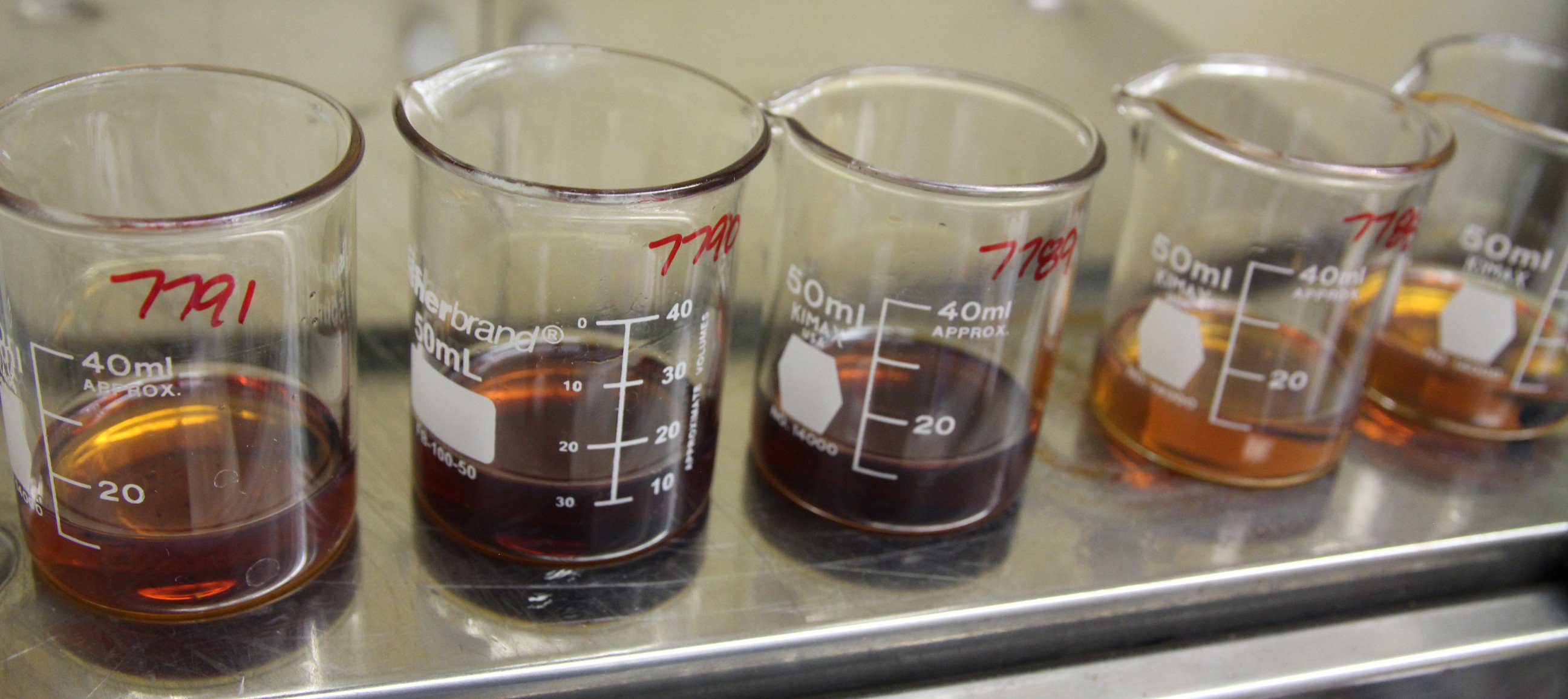
The base number (BN) of in-service oils monitors the depletion of alkaline reserve additives and is a key indicator of oil quality. Base number is an important test to perform on engine oils due to the introduction of combustion byproducts into the lubricant. These byproducts result in the formation of acids which, if not neutralized, will promote the degradation of the lubricant. Engines that utilize fuels containing sulfur will need lubricants with substantial alkaline reserve additives (high BN) in order to realize long lubricant life.
The primary purpose of BN testing is to monitor fluid health. If the lubricant is in alarm for this test, the main consequence will be lack of proper lubrication due to degradation, leading to mechanical damage. BN testing can help ensure that the oil is able to protect the equipment from corrosion, sludge, and varnish due to acid.
Diesel and gasoline engine motor oils, in particular, are constantly exposed to acidic compounds–formed during combustion–that cause the oil to become acidic. Because of this, these oils are formulated with alkaline additives to neutralize acid. The BN indicates how effective this protection is against these acids. The higher the BN, the greater the reserve alkalinity available to protect the lubricant.
Unlike acid number (AN), which tends to increase with use, the BN of an oil is at its peak when oil is new and then declines gradually with use. BN values for new engine oils run anywhere from 5 to 50. Gasoline engine oils are typically formulated with a BN around 5-10 mg KOH/g (potassium hydroxide per gram)) while compression ignition engine oils tend to be higher (15-50 mg KOH/g) due to fuel formulations.
As a rule of thumb, the BN should not fall below 25% of its initial value, but the point at which to replace the oil would depend on the application and the recommendation of Eurofins TestOil analysts.
There are two industry standard ASTM test methods for BN: D2896 and D4739. Eurofins TestOil uses D4739; the preferred method for used, in-service oils. This test involves titrating a portion of the lubricant with an acidic solution to a predetermined end point and then measuring the oil’s alkaline reserve. The more acid needed to reach the titration end point, the higher the BN.
Eurofins TestOil Analysts are highly experienced with AN testing, BN testing and a full range of other tests for industrial oils and motor oils. For more information on partnering with Eurofins TestOil on oil analysis programs or training opportunities, fill out the form below; visit https://testoil.com/company/contact-us/; call 216-251-2510; or email sales@testoil.com.
About Eurofins TestOil
With more than 30 years of experience in the oil analysis industry, Eurofins TestOil focuses exclusively on assisting industrial facilities with reducing maintenance costs and avoiding unexpected downtime through oil and fuel analysis program implementation. As industry experts in diagnosing oil-related issues in equipment such as turbines, hydraulics, gearboxes, pumps, compressors and diesel generators, Eurofins TestOil provides customers with same-day turnaround on routine oil analysis testing. For more information on partnering with Eurofins TestOil on oil analysis programs or training opportunities, fill out the form below. Visit https://testoil.com. Contact: Al Yates 216-251-2510; sales@testoil.com.
About Eurofins – the global leader in bio-analysis
Eurofins is Testing for Life. Eurofins is the global leader in food, environment, pharmaceutical and cosmetic product testing, and in discovery pharmacology, forensics, advanced material sciences and agroscience Contract Research services. Eurofins is also a market leader in certain testing and laboratory services for genomics, and in the support of clinical studies, as well as in BioPharma Contract Development and Manufacturing. The Group also has a rapidly developing presence in highly specialised and molecular clinical diagnostic testing and in-vitro diagnostic products.
With over 61,000 staff across a network of 940 laboratories in 59 countries, Eurofins’ companies offer a portfolio of over 200,000 analytical methods. Eurofins Shares are listed on Euronext Paris Stock Exchange.