
CLS Class
Certified Lubrication Specialist Class


Eurofins TestOil oil analysts know that a lubricant’s base stock can have a significant impact on performance. These base stocks range from minimally refined mineral oil to very sophisticated PAOs, some further enhanced with leading-edge catalyst technology. Starting with the fundamentals, there are five basic base stock categories:[1]
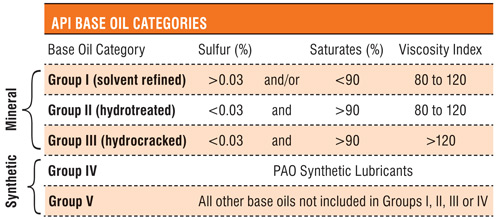
Most lubricants are a blend of at least one basestock and additives. The chemical composition (mostly saturates and sulfur) of these basestocks, along with any additives determines how lubricants perform. Lubricant properties affected by base stock include:[1]
Regardless of the lubricant’s properties, a comprehensive oil analysis program is critical to optimizing lubricant performance. Working with a lab, like Eurofins TestOil, that knows the unique properties of base stocks– their performance limitations and advantages–will ensure a more accurate picture of lubricant health.
For more information on working with Eurofins TestOil for oil analysis programs or training opportunities, fill out the form below; visit https://testoil.com/company/contact-us/; call 216-251-2510; or email sales@testoil.com.
With more than 30 years of experience in the oil analysis industry, Eurofins TestOil focuses exclusively on assisting industrial facilities with reducing maintenance costs and avoiding unexpected downtime through oil and fuel analysis program implementation. As industry experts in diagnosing oil-related issues in equipment such as turbines, hydraulics, gearboxes, pumps, compressors and diesel generators, Eurofins TestOil provides customers with same-day turnaround on routine oil analysis testing. For more information on partnering with Eurofins TestOil on oil analysis programs or training opportunities visit https://testoil.com. Contact: Al Yates 216-251-2510; sales@testoil.com.
About Eurofins – the global leader in bio-analysis
Eurofins is Testing for Life. Eurofins is the global leader in food, environment, pharmaceutical and cosmetic product testing, and in discovery pharmacology, forensics, advanced material sciences and agroscience Contract Research services. Eurofins is also a market leader in certain testing and laboratory services for genomics, and in the support of clinical studies, as well as in BioPharma Contract Development and Manufacturing. The Group also has a rapidly developing presence in highly specialised and molecular clinical diagnostic testing and in-vitro diagnostic products.
With over 61,000 staff across a network of 940 laboratories in 59 countries, Eurofins’ companies offer a portfolio of over 200,000 analytical methods. Eurofins Shares are listed on Euronext Paris Stock Exchange.